
Being vs Doing

No matter what we do, there is always a feeling of exhaustion and boredom after some time. Whether we are talking or walking, eating or reading, there is an exhaustion of sense organs and physical limbs. The only thing that does not bring an exhaustion, but brings in new energy, is to just Be. What is Being, and how is it different from Doing?  

Being is to just Be what one truly is. We are pure consciousness. When we witness our Self, there is a great effortless feeling of lightness and joy. Freedom from boundaries of space-time releases us into a light, open unbounded space where all is one, and it feels invincible and awe-inspiring. This awareness of our unbounded self brings us closer to knowing the truly limitless nature of our capabilities – be it creativity, imagination, ideas, knowledge, energy, or anything else.

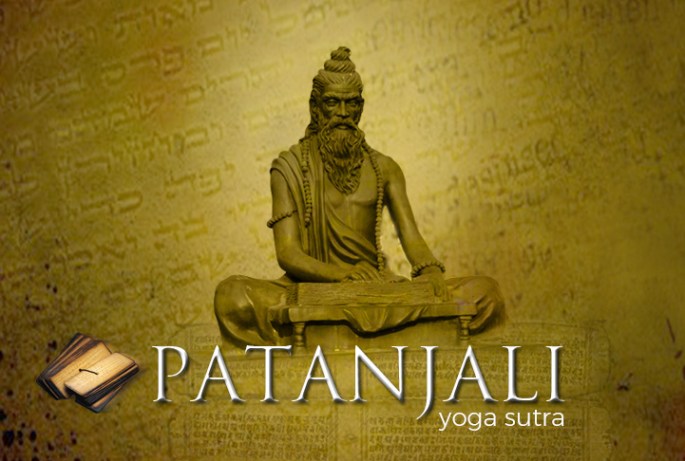
How does one just Be? It is by first understanding that to be is not to see our physical body or to even to see our mind or feelings. These can be paths to Become, but Being ultimately transcends all these manifestations of body and mind. There are many paths to Being. Maharishi Patanjali’s Yoga Sutras provides an eight-limbed path to Be. One can begin to Be by following the behavioral principles of non-violence and truth. One can begin to Be using physical asanas or the breathing practices of pranayama. One can begin with withdrawing the sense organs inward through pratyahara. One can also turn ones attention totally inwards through dharana, dhyana and samadhi. The last three techniques are totally internal activities that are done b turning the attention inward, after the body and mind have been stilled. Just as one can see a clear reflection of unbounded sky in a clear lake, so also one can see our unbounded consciousness reflected within ourselves when the mind has been stilled.

Doing vs Being vs Having thus becomes a matter of politics of goals. There are many goals competing for our attention. Being joyful and healthy is usually an obvious primary goal. However, the goals of having superior means (such as wealth) tend to have their own charm. The goals of personal development (such as widening one’s knowledge and experience base) have their own charm. Thus, there is a plethora of goals in the relative domain. While those goals remain useful to the extent we are an embodied Being, we should also not ignore the fact that the body is good only to the extent it houses our Being, our Life force itself. It would be good just Be, at least some of the time!

Yoga Sutras is Positive Psychology

Yoga means union or addition. Positive means on the growing side of the number line. Positive is represented by the same + (plus) sign as is addition or union. It is not a coincidence. Maharishi Patanjali’s Yoga Sutras is indeed Positive Psychology.

Positivity works on the principle of optimism about the future, and one’s confidence to grow and face any challenges in being able to enjoy life. Optimism comes from the implicit realization that the rest of the universe is working to guide us in the direction of growth and joy. Optimism is like finding a home in the inner Being, which is pure consciousness. This pure awareness is the unified field of all the laws of nature, which guides us through the principle of least action to do less accomplish more. The concept of inner strength comes from this self-realization of self as an unbounded invincible being.

Positive Psychology is the science of well-being. Dr. Martin Feldman of University of Pennsylvania started this field in 1997 with a speech as the president of American Psychological Association. He presents a five-factor model for wellbeing–  in the acronym of PERMA. The five letters stand for Positive Emotion, Engagement, Relationships, Meaning & purpose, and Achievements. Further research on positive psychology found that Self-discipline and Grit are more important than IQ or talent for achieving success and happiness. They also found that gratitude, hope and love are the most correlated with well-being. The single best predictor of well-being is gratitude, by far.

Yoga Sutras provide an eight-limbed path for union with unbounded pure consciousness. The first limb is yama. The relative world can be thought of in terms of the rules that govern relationships between individuals. The Yama, the master administrator, uses those rules to govern and see who has done how much good and should receive how much happiness. The five yamas are Satya (truth), Ahimsa (non-violence), Asteya (non-attachment), Brahmacharya (celibacy), and Aparigraha (non-possession). These five yamas structure the unity of natural laws to govern. The second limb of Yoga Sutras is niyama, or a set of rules for personal conduct. The five main niyamas are Shauch (cleanliness or purity), Santosh (contentment or satisfaction), Tapas (purification through strong effort), Swadhaya (self learning), and Ishawarpranidhan (bringing god into one’s awareness).

Yoga Sutras are a great path to developing the qualities for gratefulness and happiness. Gratitude directly maps to god-awareness, or appreciation for the gift of life. I wrote earlier on this blog that “what makes people most happy is to be present, to be here now! We are happy when we are fully engaged in whatever we are doing at the moment. Gratitude and Forgiveness are other habits that bring happiness.”   I believe that Positive Psychology is a secular version of Yoga Sutras.