This Too Shall Pass: Lessons from a Horse Named Bob

This Too Shall Pass: Reflections of a Horse Named Bob on space, time, publish or perish, and the curious destiny of those who believe themselves indispensable.

My name is Bob. I am a horse. Not a particularly philosophical horse, although I have had plenty of time to think since human beings stopped needing me. My ancestors carried kings into battle, transported scholars to universities, pulled carts full of books, and helped build the civilizations that eventually made us redundant. We were once symbols of power, wealth, speed, and military superiority. A man on horseback was a man of consequence. An army without horses was an army at a disadvantage. Then came the automobile, the tank, and the airplane. Within a remarkably short period, we went from being indispensable to being recreational. Nobody consulted us about this transition. There were no conferences on equine displacement, no government committees on the future of horses, and certainly no grants to help us reinvent ourselves. We simply passed from the center of civilization to its margins. I have often wondered whether this was progress or merely a change in who got to sit in the driver’s seat.

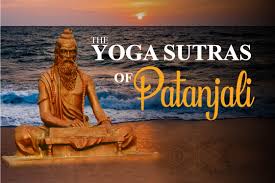
Lately, I have been contemplating a familiar human expression: This too shall pass. It is a rather beautiful sentence, containing an entire philosophy in four words. This points to what is here, the world of space, form, identity, and circumstance. Pass points to time, the movement through which every form changes, disappears, or becomes something else. The word too quietly reminds us that nothing is exempt. Not the emperor, not the empire, not the university, not even the professor with 300 publications. Ancient wisdom understood this rather well. The Bhagavad Gita distinguished the changing field of existence from the deeper Self that Krishna describes as unborn and undying. The Buddha emphasized impermanence. Patanjali invited human beings to quiet the movements of the mind, while the Upanishadic traditions explored the possibility of a reality beyond ordinary space and time. Different traditions offered different explanations, but they shared an important suspicion: the things we take most seriously may not be quite as permanent as we imagine.

Human beings, however, have developed a rather different philosophy, particularly in their universities. It is called Publish or Perish. I first encountered this expression while grazing near a university campus. I was struck by its remarkable resemblance to This Too Shall Pass. Both concern existence and disappearance, but the resemblance conceals a profound difference. The ancient expression is an observation about reality. The academic expression is an instruction, perhaps even a threat. Publish, and you may continue to exist. Fail to publish, and you shall perish. It is a curious way to organize a community supposedly devoted to wisdom. One might have expected its guiding principle to be Know Thyself, Seek Truth, or perhaps Understand the Universe. Instead, the institutional imperative is to produce more evidence that one deserves to remain employed.

Horse in glasses and formal clothes reading among books in a library
A horse dressed as a scholar studies books and notes in a warmly lit library.

Now, I have nothing against publishing. Human beings have accumulated an astonishing body of knowledge through writing, experimentation, argument, and discovery. Publishing allows ideas to travel beyond the people who first conceived them. It creates intellectual capital, professional recognition, institutional prestige, and sometimes considerable economic value. In this sense, publishing is an act of expression, a movement outward into the world of forms. It enlarges one’s presence in space and, through citations and archives, attempts to extend that presence through time. A successful academic may accumulate hundreds of papers, thousands of citations, prestigious titles, and a remarkably long curriculum vitae. From my perspective, this is not entirely unlike a horse collecting increasingly elaborate saddles. Some are beautiful, some useful, and some so ornate that one wonders whether anyone remembers the horse underneath.

But it is the other half of the expression that interests me most. Perish. What a severe word to place at the heart of an intellectual profession. It evokes disappearance, destruction, and death. It also introduces a peculiar form of institutional violence, not necessarily physical, but psychological and existential. The academic is invited to live under the shadow of possible professional extinction. And the threat is organized through time: annual reviews, tenure clocks, submission deadlines, promotion cycles, citation windows, and performance targets. A deadline is, after all, a boundary imposed upon time. Cross it without the required evidence of productivity, and something may die: an opportunity, a career, a professional identity. The continuous flow of life is divided into measurable intervals, each carrying its own little judgment day. Humans have become extraordinarily inventive in making themselves anxious.

What interests me is the binary structure of this philosophy. Publish or perish. Produce or disappear. Succeed or fail. There is no obvious place for silence, reflection, incubation, or the possibility that a person might contribute to knowledge without continuously adding to its volume. Ancient traditions often understood creation and dissolution as interconnected movements of existence. The academic institution has converted them into competing alternatives. It is almost as though the university has taken the cosmic principle of impermanence and transformed it into a personnel policy. Socrates, who famously left no writings of his own, might have encountered considerable difficulty obtaining tenure. I suspect that would have amused him.

And now comes the development I find particularly fascinating. Human beings have created artificial intelligence. Not merely machines that carry heavy loads or move faster than horses, but systems that can write, reason, analyze, compose, and increasingly perform activities once considered distinctively human. Researchers speak of artificial general intelligence, artificial superintelligence, and futures in which machine capabilities may exceed those of their creators in many domains. Whether and when these possibilities arrive remains uncertain. But the direction of change is already sufficiently visible to cause unease. The same academics who have spent decades celebrating productivity, innovation, efficiency, and the expansion of knowledge are beginning to wonder what happens when machines become more productive, more innovative, and perhaps more capable than they are.

I confess to experiencing a modest and entirely uncharitable satisfaction.

When tractors arrived, nobody asked whether horses were experiencing an identity crisis. When automobiles displaced carriage horses, there were no special symposia on preserving equine dignity. Human beings called it technological progress. The market had spoken. The future had arrived. Adaptation was our responsibility, although we had rather limited influence over the matter. Now the creators of advanced technology are beginning to contemplate their own possible displacement. Some worry about employment, others about meaning, autonomy, or even the long-term survival of humanity. These are serious concerns, and I do not wish to trivialize them. Still, one can hardly blame an old horse for noticing the symmetry. The species that mastered us through superior tools now wonders whether its own tools might eventually master it.

Of course, the comparison is imperfect. Horses did not create automobiles, and human beings retain choices about how AI is developed, governed, and used. Nor is displacement inevitable in every profession. Yet the deeper irony remains. Human civilization has repeatedly treated the disappearance of older ways of life as an acceptable price of progress, especially when the disappearing lives belonged to someone else. Entire species have been driven toward extinction through human activity. Ecosystems have been transformed, livelihoods eliminated, and cultures disrupted in the pursuit of efficiency, expansion, and power. Much of this has been called development. But when the possibility of perishing begins to approach the developers themselves, the philosophical mood changes rather dramatically.

Perhaps this is the moment to reconsider the meaning of perish. Does a professor perish when a machine writes a better literature review? Does a researcher disappear when an algorithm discovers a pattern more quickly? Does human intelligence lose its value when another form of intelligence surpasses it in particular tasks? These questions depend upon what we believe ourselves to be. If our identity rests entirely on what we produce, then any superior producer becomes an existential threat. If our worth depends on being the fastest, smartest, or most cited, we have chosen a precarious foundation for existence. I learned this lesson when the first automobile passed me on the road. I was no longer the fastest means of transportation. But I remained a horse. The automobile had changed my usefulness to human beings; it had not changed the fact of my existence.

This is where the ancient wisdom becomes unexpectedly contemporary. Krishna’s teaching about the Self, Socrates’ insistence on self-examination, Gandhi’s experiments with truth and nonviolence, and Maharishi Mahesh Yogi’s emphasis on transcending the activity of the mind all invite us to distinguish our deepest identity from our changing accomplishments. They do not ask us to abandon action or knowledge. They ask us not to become imprisoned by them. The quantum world, too, reminds us that reality may be more subtle than its familiar appearances, although quantum physics does not establish these spiritual claims. Perhaps the most important intellectual breakthrough would not be another technology, but a more mature understanding of what technology is for, and who we are when our technologies can do much of what once defined us.

From my stable, I sometimes wonder whether the academic motto might be improved. What about Publish and Reflect? Or Discover and Share? Perhaps even Know Thyself, Then Publish If You Have Something Worth Saying. I realize these alternatives would be difficult to incorporate into university ranking systems. Reflection is notoriously difficult to count, and wisdom does not always arrive before the submission deadline. Still, it might be worth experimenting with a civilization in which the production of knowledge is not confused with the purpose of knowledge, and where intelligence is measured partly by our ability to live wisely with one another and with the other forms of life sharing this planet.

For now, I remain Bob, a horse whose ancestors helped build the world that no longer requires their services. I have watched human beings conquer distance, accelerate time, multiply knowledge, and invent increasingly sophisticated methods of making themselves indispensable. I have also watched the things they considered permanent become temporary, and the things they dismissed as temporary become unexpectedly important. I do not know whether artificial intelligence will eventually surpass its creators, whether universities will reinvent themselves, or whether humanity will discover a more peaceful relationship with the planet. I am merely a horse, and prophecy is not among my professional qualifications.

But I do know one thing. The world did not end when the age of the horse ended. It changed. And perhaps the world will not end when the age of exclusively human intellectual supremacy changes either. There may be loss, suffering, adaptation, and entirely new possibilities. What matters is how we meet them.

The ancient sages said, This too shall pass.

The modern academy said, Publish or perish.

And now, as artificial intelligence begins to write the next chapter, I find myself wondering whether the professors might finally appreciate the difference.

I lower my head, return to my grass, and enjoy the morning.

After all, I have no papers due.

And, for once, nobody is asking me to pull the cart.

This too shall pass.

Life is Pure Existence

Life is pure existence. It is pure consciousness at the bottom of the V in V-theory of Transcendence (Figure below). The top of the V is the dynamic manifestations of life. These manifestations arise and transform and disappear at different time frames. Human beings appear at the ~ 80-year time frame. Other entities appear at longer or shorter time frames. Trees last 100s of years. Bacteria last just a few days. Longer life span is not a sign of greater intelligence or success. Attachment to this human body and its perpetuation is the ultimate mithya or illusion. We should detach from our human body (and near and dear ones’ bodies etc.) as it goes through its cycle of maturing and dissolving.

So, what are we to do with our individual short gross physical bodily existence? Doing is manifesting. We can create things and situations but should not be attached to those manifestations. Objects such as houses and cars and jewelry are a very low life form. The higher life form is that which is free from illusions and boundaries and is intent on accomplishing its assigned task of manifesting ever greater reality. Our hearts should be open to receiving guidance from higher life forms, or from pure life itself. We should be aware of our own divine powers and be a channel for creation as the time and situation demands.

Why do we manifest gross physical forms? Why do we take pleasure in creating such low-level toy forms? Why are we attached to these less significant creations? The answer may lie in social conditioning and legal structures. Such attachments provide a handle to any powerful evolved entity to manipulate us. Why do we fall for such manipulations? Some call ii God’s lila or divine play. It sometimes takes up to fag end of the individual human life span to realize the futility of attachments to manifestations. The young are mostly unable to learn this lesson from the elders. For the young, these toys are seductive. That is just the way it is!

There is enormous seduction of numbers, words, and language. Everything important should be measurable and comparable. By dividing, discretizing, and abstracting everything into tokens, the intellect allows the creation of new toys with ease, especially using machines and more recently Artificial Intelligence. Analog processes such as feelings vanish. Hearts close to what one does not already know. Awe and wonder vanish from awareness. The notion of an open divine unbounded invincible self seems ludicrous. This continues till some misfortune such as cancer or pandemics strikes and breaks that spell. Then the wisdom shines, and life appears valuable for its own sake!  

Mental Health for the whole world

I appreciate the discussion about mental health. In my next avatar or phase of life, I want to become some kind of a mental health practitioner.  A big cause of mental health may be financial insecurity in a capitalist world. …And the social inequalities and pressures and heartburn that causes. The pharma lobby and DSM lobby and many other money-making machines in the West are hard at work to not fully cure but mostly contain the problems. The Federal government has created a strategy to combat mental health issues, however it remains to be seen how effective it will be.

The human body and mind have many ailments arising from whatever thoughts or beliefs or practices etc. Patanjali’s yoga sutras provide the 8-limbed formula to get away from it all.  Different practitioners or gurus have emphasized different limbs to suit the times and their purpose. Mahatma Gandhi emphasized Yama and Niyamas to uplift hundreds of millions of Indian people out of colonization. Maharishi Mahesh Yogi used dhyana and samadhi to uplift millions of people from deep stress and anxiety of nuclear annihilation towards a vision of a permanent peace. Ramdev used Asana and Pranayama to uplift a billion people from all sorts of ailments.  But from personal stories one knows that any combination of these could cure eyesight, hypertension, and backache etc. Add to it Bhagavad Gita’s message that ‘you are neither born nor do you die’ that also reminds us of our true higher / Yogic self. That is the Truth (capital T) that alone can deliver strong healthy minds.

The language of health needs to change. We are becoming self-educated semi-experts at cancer and hypertension and diabetes and an infinite number of specific diseases and disorders and syndromes that may afflict us. The solution may lie in the language of Chitta vritti nirodha (yoga sutras) and balance of doshas and vikritis (Ayurveda) and harmony (classical / Gandharva music), … and activation of chakras and kundalini and more such vibrational and energetic constructs. The dualist and disease-naming language could be replaced by a more holistic joy-feeling language. As Chomsky famously said that the primary role of language is the self-talk or inner chatter, and not so much communication with others. If the inner monkey-mind chatter could be transformed to coherent silence and awareness, health will be a natural outcome. If health is what we want, a health-ful language may be a starting point.

A health-ful language should be beneficial to the health of body or mind. It should describe something corrective or beneficially effective, even though it may be unpleasant. It should speak to the helpful effects of clean air and water and surroundings. It should speak to what benefits and sustains life physically, mentally, and spiritually. It should make a positive contribution to a healthy condition.

With gratitude to all of you for reading it! 

Be the god we are

Some day everyone will be able to see the god in themselves. Channels will open for god to act through them. Then they will become net exporters of happiness. Till then they will plod on in a desert view of life.  No one else can save anyone. Just turn on the light, and see that the riches of the kingdom are all within ourselves. A gu-ru helps drive away the darkness by turning of the light. Thus there is an infinite gratitude to them for providing the man-tra to roo the goo (make the darkness run away).  Thus also the saying: guru bin gyan kahan.  A most famous couplet says: whose feet should I touch if the guru and god are both standing on front of us? We should touch the feet of the guru because they help find the path to god. 

Read this over and over till the fever / fear breaks.  Western philosophy and psychology were born as reaction to the totalitarian vise of the Catholic Church on social and spiritual life. Throwing out Christ along with the church from western life has created a most devastating crisis of meaning in life.  The reduction ad infinitum to the ‘me and my’ as the sole domain of one’s Self is a mirage. Separation is a myth, says Ssdhguru. Western psychology is foundation-less, says Maharishi. 

Three quantum physicists won the 2022 Nobel Prize for Physics for proving that there is no reality.  Some authors call Consciousness as the mother of all capital. That is an indirect compliment from the economic world to the real foundation of life. There is no ‘Me’.  Commercial forces will continue to do their magic of selling fool’s gold. Wisdom traditions of the East are a powerful antidote to the godless meaningless commercial world of the primacy of ‘individual’, realizing that the notion of an indivisible individual is a mirage that too will dissolve into a universal field just as the notion of an atom dissolved into a unitary Schrodinger’s quantum equation. Now there is another Nobel Prize for explicitly stating that there is no reality.

This is cause for celebration.  We have a serious responsibility to not take ourselves too seriously, quips Maharishi.  Just let the mind settle and it becomes consciousness. मन becomes आत्मन। Consciousness is everywhere, so it knows everything, and that makes it omnipotent and invincible. Its manifestation is unpredictable, uncertain and probabilistic.  Franklin quipped that the only two certainties as death and taxes. Let’s accept both equally. Let god flow freely through ourselves while we are still having this earthly manifestation.  We are just this moment. Have fun in this moment!

Thanks for reading. Comments are welcome 🙏

Maharishi International University (MIU): Epicenter of Peace

MIU’s Global Country of World Peace is a beautiful organization that embodies what we are:  peace-loving citizens of the world, who are not divided by political or governmental surface levels of difference. As Maharishi said: What we put our attention on grows stronger. We are coming together and experiencing that field of life which is the field of unity consciousness – the unified field of natural law. Vedic technologies of consciousness, that operate from this deepest level of natural law, are a million times are more powerful than nuclear technologies.

MIU launched an Institute for Permanent Peace (IPP) this month, for applying a scientifically validated Vedic approach to creating an environment for permanent world peace. It is urgently needed to mitigate an existential risk from local wars evolving into an uncontrollable global conflagration. The purpose can be achieved by the sustained group practice of Vedic technologies, including Transcendental Meditation™ and TM-Sidhis, to create coherence in global collective consciousness.  The square root of 1% of any population—about 10,000 for the world– practicing these technologies in a group is sufficient to form a lighthouse of peace and prosperity for the whole world. Over 50 demonstrations and 23 scientific published studies have documented the benefits of large group practice of TM and its related advanced techniques on society as a whole. In every case, this approach produced marked reductions in crime, social violence, terrorism, and war, and increased peace and positivity in society.

IPP is proposing the creation of a permanent coherence-creating group comprised of 10,000 specially- trained Vedic experts to perform yoga and yagya. Results will be measured and monitored by an independent board of scientists.  Global celebrities have expressed support for the project. IPP broke ground on a project to create Vastu housing for thousands of such Vedic experts to live on MIU’s campus in Fairfield, Iowa. 

Meeting with India’s finest actor Anupam Kher

Noted filmmaker David Lynch, founder of an international charity that has brought Transcendental Meditation to more than one million under-resourced children worldwide, has issued a challenge to the world’s philanthropists: use a fraction of your wealth to establish large groups of advanced peace-creating Vedic experts in Ukraine and other critical hotspots, and leave a legacy of world peace that will last for generations.  https://davidlynch.gusp.org/

Everything is perfect!

Everything is perfect!

I believe that there is no purpose of evolution, except to get better at being ourselves, and escaping from the physical manifestation and its pains from contact with objects.

I have been off tea and coffee for the last almost 20 years since I first went to a Vipassana 10-day retreat, and the teacher asked us to eschew these and other intoxicants for the ten days and ideally forever. I think from there and my decade long practice of Vipassana brought me to the understanding that we are ourselves the ultimate reality. Then during the last decade, being in Maharishi Mahesh Yogi’s University, brought for me the idea of unbounded unified consciousness as the Vedantic nondual reality. It made complete sense during progressively deeper and longer and advanced sessions of Transcendence. All this while we have been eating and drinking non-agitating foods to purify our nervous systems to experience the oneness within our own selves. I have been amused by the growth in these soft-toxin businesses such as coffee and tea. I heard about the Oxford Circle of scientists using Assamese tea and then creating the dominance of the Scientistic Revolution in the service of the British East India company. The poor tea-pickers from Darjeeling will be tickled to learn that their tea was instrumental in creating the scientistic paradigm as we know it.

Just a few days ago, I chanced upon a young Argentinian man named Mattias de Stefano, who speaks about the unbounded consciousness as being the ultimate dimension, and then goes on to describe up to 9 dimensions. The second dimension produces a duality, which is mostly a thought system. The third dimension provides a neutral level also, and physicality appears. Time appears when we rise to perceive the fourth dimensions. Our 3-4 dimensional (space-time) body is a projection of our high-dimensional self. This is like a small 2-dimensional picture is a projection of our 3-dimensional body. At the fifth and sixth dimension we are pure energy, and later on pure vibrations that are the creator of all reality. At the seventh dimension, there are seven laws of existence represented through the seven chakras. At the eighth dimension, existence is the field of infinite correlations, the unbounded universe that contains everything. We are not of the universe, or in the universe, … we are the universe. A the ninth dimension, we are pure void, like a black hole, which provides the context in which the universe appears. That resonates so much with Buddha’s teaching.  

Two things from here: The first thing is that I find Mattias’ message very similar to that of Maharishi’s. Maharishi also had the baffling ability of speaking about the dynamics of the unmanifest consciousness. ‘How did he know?’, the world wondered. But that did not stop people from following him and using his descriptions of reality, that was tested through thousands of experiments published in over 700 scientific publications. In particular, I am extremely interested in Maharishi’s theory of collective consciousness. This Super-Radiance effect, that can only be understood from a consciousness-as-a-field paradigm, has been statistically proven and published beyond reasonable doubt (over 50 journal publications).

The second fascinating thing from this Argentinian young man is to hear what else he says. He speaks about his past lives, going back thousands of years, in great detail, with specific locations and names and what happened. He reports living in civilizations from across the various galaxies, tens of thousands of years ago. He is reporting solar systems with 2 or 3 suns with planets facing a night-time of only 2 or 3 hours. That means a lot of what we see and do could be biologically different in a different solar system. Many civilizations arise and die, and this one too will die, he says. The important thing from us is to raise our perceptions to the highest levels. If we die of consciousness (nothing left to do) then we do not return to the lower dimensional existence. Instead if we die of time, we will be back. One particular metaphor caught my attention: We are the spider that creates the web. We are not the web. We certainly are not an object caught in the web. The day we realize that we are totally liberated. We are the creator.

He says, that everything is perfect as it is. There is no purpose to existence. The path is the way. Have fun!

International Conference on Consciousness-Based Leadership and Management – summary report

Maharishi International University (Fairfield, Iowa, USA) organized a three-day International Conference on Consciousness-Based Leadership and Management, from May 21-23 2021, for mapping the path to Oneness and a flourishing humanity. The event was co-sponsored by the International Academy of Management through its Management, Spirituality and Religion (MSR) interest group. More than 1100 attendees from almost 400 cities around the world registered for the event. The event had 90+ speakers including Dr Tony Nader, Dr Robert Quinn, Dr. Subhash Kak, Dr. Anil Gupta, and other reputed professors from top institutions from the US, India, UK, Germany, Europe, Brazil, Australia, New Zealand, China, Japan, Indonesia, Equador, South Africa, and more. They also represented a wide range of fields including Management, Leadership, Music, Medicine, Computer Science, Quantum physics, Vedas, Ayurveda, Arts, Psychology, Consciousness, Sustainability, and more. They participated in 15 sessions of integral conversations and research presentations of 90 minutes each over three days. Our feedback surveys showed consistently high ratings and comments. Every session aimed to produce one or two principles towards a flourishing humanity.  We sincerely thank our board of advisors, which included Drs. Chris Laszlo, Judi Neal, Sharda Nandram, Satinder Dhiman, Kathryn Pavlovich, and Cathy DuBois, for their guidance and counsel in making this event a great success. We also wish to thank all the speaker and presenters for being a part of this journey.

There is a great demand for videos for replays and we have been working on editing them and making them available. Here is a wonderful playlist called Consciousness-Based leadership @ MIU, comprising of seven keynote and panel conversations, each of which is about 60-90 minutes long. https://www.youtube.com/playlist?list=PLs4GvULvBU44jIFWP4IaDCXb61lgLMk3Y

Here is a brief summary of the videos. The opening keynote conversation with Dr. Tony Nader lays out how consciousness is primary, which is a new paradigm with increasingly greater explanatory power. Then there is the transcendental keynote conversation where they lay out the benefits of transcendence, its neuroscience, and the path ahead.  Then there is the quantum and technological conversation where we discuss how quantum world leads us to different ways of leading and organizing, from an unboundarized and uncontainerized view of ourselves as the field of consciousness. Then there is the organizational cultural conversation where we discuss positive scholarship away from deficit and towards flourishing, and from workplace spirituality to global consciousness, as the organizing metaphors.  Then there is the panel conversation on Dialogic approaches where we begin with asserting that our words have more power than we think, in bringing about a harmonious world.  Then there is the panel conversation on the future of management education, where we agreed that the future is consciousness-based education, based on empathy and fairness and justice.  Then there is a panel on Vedic approaches to Oneness, beginning with Bhagavad Gita, and including other traditions towards unboundedness and self-transformation.

In addition, Here is the play list of about 25 pre-recorded short (7-8 minute each) research presentations by the authors themselves. https://www.youtube.com/watch?v=Io4mRLsEMjg&list=PLs4GvULvBU44ng3DX6qbDegNsS9lzzCCm

 Would appreciate if you could enjoy these videos, and post your comments.

Wish you a blissful and flourishing life!

Anil Maheshwari, Conference Organizer and Co-Chair

We are more than we think

Our thinking is limited to things one can think about. Some of those things are sense objects and some are mental objects. Our perceptions and feelings are difficult to think about. Our being is beyond thinking. 

We know more than we can tell. That is tacit knowledge. Our words have more power than we think. These could be words spoken with others or with oneself. This is our latent power. 

We exist in more ways than we can tell: The body, the mind, the intellect, the spirit, the soul. We are the unbounded Brahman.  At some level of thinking all these things vanish. We become no-thing. No-thing is actually everything. But there is no way to think about everything.

We have more than we know. We have all the laws of nature within us. We exist in conformance with, and are the manifestation, of all the laws of nature. We permeate every part of every galaxy. 

We are beyond qualities, beyond names, beyond words, beyond language. We transcend and include all of those. We are silence in dynamism, wholeness in motion. We are naturally blissful, like the earth is grassfull and the sky is starfull. 

We are naturally full, or fullness, or wholeness. We just need to be aware of it at every moment. We are a wave flowing and rising and falling. Particle wise, we are at best a little boat that rises and ebbs with the waves. The life force naturally flows through us in its own rhythm.

As Pascal said, the Heart has its reasons, that Reason has no knowledge of. Nurture your own heart. Be with those that nurture your heart. Let your heart swell with joy. Share the joy with the others. And you will get 10x in return. And the whole world will be one big happy family!

High Consciousness Leader and Manager

High Consciousness Manager:  through Transcendence and Development of Consciousness

Spring is in the air, and that means time to experience the beauty of the flourishing environment as we wake up from winter. What things are fresh in your mind?

Grand challenges facing the world require a higher level of consciousness to experience and operate from a level of total inter-connectedness of life. Business organizations are undergoing revolutionary changes from exponential development of technologies of production distribution and consumption. Managers need to adapt to Artificial Intelligence systems that have been doubling in capacity every 3-6 months. Managers need to evolve rapidly to engage with the opportunities and threats posed by this rapidly evolving socio-technical environment. They need to develop the capabilities of empathizing and synergizing, visioning and transforming. Managers need to rapidly unlearn self-limiting beliefs and tap into their own unbounded potential and that of their teams. 

In essence, managers need to develop a higher level of consciousness, beyond that of the superficial and the observable. They need to learn to transcend their ordinary states of consciousness (waking, dreaming and sleeping) and access the higher states of consciousness where one can experience the pure unbounded Self, the source of infinite potential, within oneself. Our V-theory of Transcendence models a wide range of techniques to transcend surface reality. Research has shown that through transcendence, individuals can experience expanded awareness, along with creativity and bliss for more effective action and well-being.  The ability to raise consciousness around themselves will be a key role for the new manager. Research has also shown that transcendence by groups can create coherence in collective consciousness. This may be key to development of pro social and environmental behaviors towards Oneness and Flourishing in the world. 

We are organizing a conference on Consciousness-Based Leadership and Management to bring together diverse perspectives for Oneness and a flourishing world. We welcome you to join almost 100 academics and globally renowned speakers in this incredible 3-day AOM-MSR-cosponsored leadership event, focused on  Mapping the Path to a Flourishing Humanity. Be a part of conversation while creating meaningful connections with other global leaders.  Sign up for the conference for FREE today: https://www.eventbrite.com/e/international-conference-on-consciousness-based-leadership-and-management-tickets-139942478721

#leadership #consciousness #management #flourishing

Life is a donut!

Life is a donut. 🍩 (or doughnut).

We are donuts. Our bodies are donuts. Bodies have a hollow tube running through them. When the hollow tube remains flowing and clean, our bodies are healthy. The moment it clogs, diseases appear. Our life is also like a donut with a hollow hollow tube through it.  The upper side of the donut is the absolute, the unbounded cosmos. The bottom part of the donut is the relative, bounded by resting on the earth. Both sides are essential. So long as the hole in this donut connects the absolute with the relative, the mind functions well and remains healthy. Life gets into unbounded flow at some times, while remains engaged in specific chores at other times. 

When we eat too much or eat junk stuff, our body’s hollow tube begins to clog. When we don’t flush it down it with enough water the tube clogs. Similarly if we take in too much data and information we need time and energy to digest it. Undigested information clogs the hollow tube. The connection between the top and the bottom of the donut gets clogged. The donut becomes more like a pancake. At that point, the view is mostly of the relative side of life, the bottom of the pancake, and the view of the top is totally obscured.  Yogic techniques such as pratyaahara are ways to unclog our mind. Meditation helps to reopen the hollow tube of the mind and makes the pancake back into a donut. Attention of the mind goes round and round in the donut in a self-referral manner, even as it connects with the infinity above and the minuscule stuff below.  

A donut can be fresh thick soft and sweet. It can be glazed and have toppings, and be of different sizes. Similarly our life can be fresh expansive smiling joyful and grateful. It can have its idiosyncracies and passions and wisdom. OR else life can be short brutal nasty dour fearful stale and putrefying. 

Be a fresh donut 🍩everyday.