On Moksha (Liberation)

Moksha is the ultimate thing. It is liberation from the biggest falsehood – that we are this body or the mind. Moksha is the liberation of the soul from the confines of the mind and body. We say that we have a mind, and we have a body. We are the master of our mind and body. We should devote our time living in touch with our true self, which is the soul, or whatever other name it may be called by.

Moksha brings freedom from the afflictions of the mind and body. The body is frail; it can be broken; it can get diseased. The mind is fickle and flighty; it can get anxious or fearful or angry; it can get depressed. The body is a great tool while it works; it houses us and allows us to engage in the relative world of other souls and the material things. The mind is an even more powerful tool while it works; it helps us grasp things unmanifest and subtle, through the power of thinking. The mind allows to plan, act and be happy. To be liberated does not mean discarding the body or the mind; it means not to be confined or defined by them.

A person who has achieved Moksha experiences total and eternal bliss. Such a person is not moved or agitated by anything in the relative world. Such a person is able to ‘see’ the soul in every other person and can connect with them. Such a person can communicate with their mere presence, without using any words or even raising a finger.

Moksha is achieved by (a) a deep desire for it, and (b) the right way to transcend the relative world of mind and body. I believe that everyone fundamentally desires moksha, as no one wants to suffer pain and misery. However, the strength and the depth of desire can be different for different people. I do not believe we can will a desire, i.e. the mind cannot create a desire. Desires are what they are, and they exert the most powerful force upon us. The right way to fulfill the desire of Moksha is the way of meditation. All meditations are not the same. I believe that transcendental techniques such as TM (from Maharishi Mahesh Yogi) and Vipassana (from Buddha through Mr. Goenka) are two such techniques, though there could be many more of them.


Messages and Lessons from the Fourth Annual International Deep Green Symposium at MUM

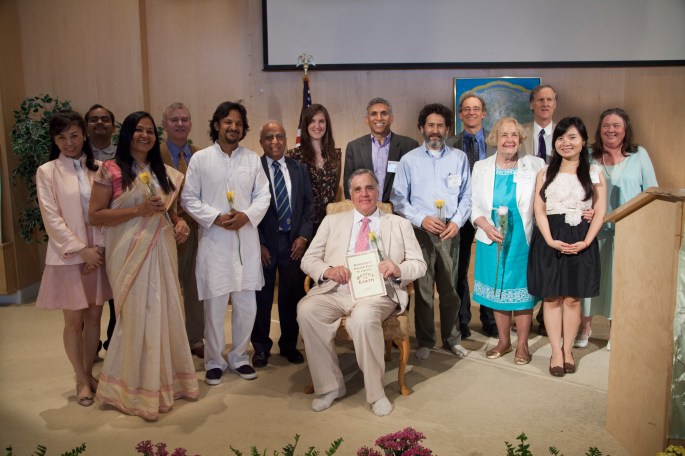
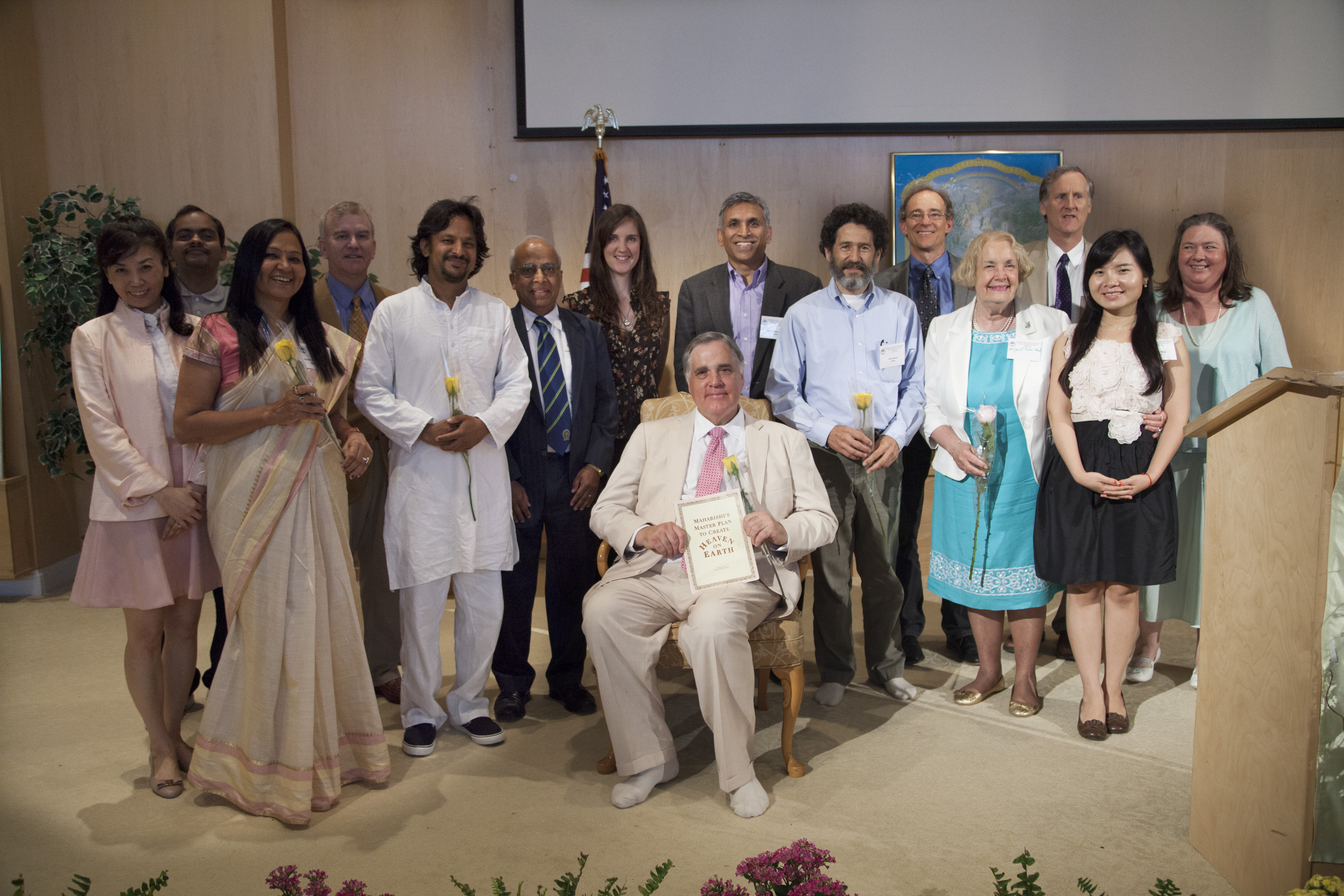
DeepGreenSymp - grouppic

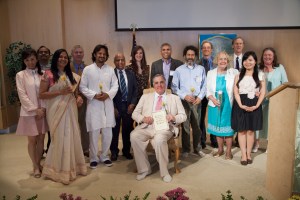
Maharishi University of Management held its fourth annual international deep green symposium in Fairfield Iowa on June 26-27, 2015. There were 16 invited speakers, including two from Harvard University, one from India, and many from MUM and around the country to present their research and perspectives on sustainability. The speakers presented their research from philosophical, organizational to technical perspectives in a short 20 minutes. Some of the messages and lessons from the conference were as below.

Leopold’s “land ethic” says that “A thing is right when it tends to preserve the integrity, stability, and beauty of the biotic community. It is wrong when it tends otherwise.” Dr. Scott Herriott analyzed the validity of this statement from three philosophical perspectives: Utilitarianism (Bentham, Mill), De-ontology (Kant), and virtue ethics (Aristotle), and found that none of them did full justice to the land ethic. He concluded that the most effective way to cultivate the virtues responsible for environmental sustainability is to develop the consciousness of the individual, and help everyone do spontaneous right action in accordance with natural law. Sustainability refers to a very old and simple concept …do unto future generations as you would have them do unto you! Ms. Vicki Alexander Herriott spoke about ‘Consciousness-based sustainability’, defined as our ability to act in a way that meets the needs of the present without diminishing opportunities for the future. It is based on our level of consciousness, our awareness and experience of the interconnectedness of all things.

Nowhere is the sense of memory about the past and their connection to Natural Law deeper than in East Africa. Mr. Jim Schaefer reported on Sustainable Consciousness based projects in Africa, with the purpose to enliven he memory of Natural Law, to enhance connectivity to Natural Law, and to awaken from within the African people the full potential of all Africans to create a sustainable future for themselves.

Resilience is a quality akin to adaptability, which is critical for ecosystems to robustly thrive amidst environmental turbulence. Dr. David Goodman spoke about developing resiliency through conservation. He reminded us to Leave No Trace while traveling through the wilderness areas in order to protect these special places for future generations.

Progress towards sustainability at the community level depends upon successfully implementing local strategic plans. Dr. Ayako Huang demonstrated that the processes and challenges of the shared action-learning approach to sustainability projects proceeds through five sequential steps. Shifting from fossil fuels to renewable energy requires changes on the individual and community levels. Ms. Anna Bruen explored why and how communities are shifting from fossil fuel consumption towards renewable energy adoption and the relationship between individual action and community transformation, using examples of what a couple of mid-western towns are doing to address their energy needs.

Greenhouse gases arise from two primary sources: direct emissions such as from agriculture and waste, and from burning of fossil fuels. There are increasing concentrations of GHGs in atmosphere, and increase in global average temperatures, which lead to various adverse impacts emerging over time. Dr. Robert Stowe of Harvard University showed that there are two major mechanisms to contain and reduce carbon from the atmospheres: carbon cap and trading or a carbon tax. He reported on the discussions between US and China on the technical issues towards a global climate accord in Paris later this year. Managing the product life cycle more effectively can help re-consume all waste, and thus reduce the waste going into landfills. Using the examples of HPs recycling of printer cartridges and others, Dr. Dennis Heaton and his colleague showed that Life cycle thinking helps consider social and environmental impacts not only of one’s own business operations but also of upstream and downstream supply chain partners. As awareness of the whole value stream expands, opportunities for improvement can be seen.

The Urbanization project is likely to be completed in our children’s lifetimes. Dr. Anil Maheshwari showed how Data-smart Big cities will become digital governance platforms to responsively and interactively serve a superior experience to their residents. Using the multi-million records data set from the usage of bicycle rentals in the city of Chicago, he showed how collecting and analyzing big data from many sources can help uncover service usage patterns to design better experiences. In contrast, Drs. Lonnie Gamble and Travis Cox explored the limits of how much technology can accomplish, and asked directly for a Sustainability Revolution, where unity and diversity coexist in a symbiotic relationship. They challenge the blinding notion that technologies are neutral – that the only thing that matters about them is who has access to their controls, that they have no intrinsic qualities that inevitably produce certain ecological or political outcomes. They described deep sustainability as going beyond efficiency and substitution, in service to radical redesign based on a worldview that uses ecology as a metaphor rather than the machine, holism rather than reductionism, compliments science with many ways of knowing, and is grounded in an experiential and intellectual understanding of the unity that underlies the surface diversity of life.

Mr. Stuart Valentine showed how an awakening to the abundant flow of energy Is leading the transition to a renewable energy economy. He called for an enhanced corporate performance report card, that naturally takes us to a circular & more spiritual view of the economy.   This requires a fresh financial toolbox informed by Nature’s principles to support a new circular economic investment framework. Echoing Gandhi’s message of there being enough for everyone’s need but not enough for everyone’s greed, Dr. Ram Ramanan showed why we should go beyond the triple bottom line (of profit, people and planet) and called for ethical decision-making as the way forward for creating wealth for all stake-holders and not only the shareholders. His ethical values checklist including transparency, reliability, citizenship, and responsiveness. Mr. Ved Nanda spoke about how international law can be a force for sustainability by creating moral pressure, as well as frameworks for guiding ethical decision-making.

Dr. Sunita Singh Sengupta of ISOL said that the ancient Indian value system provides a broader context of nature and human sustainability. The concept of Rin (or debts) shows that one should feel grateful for what one has received from one’s father, teacher, the gods, and also the motherland. Ecological insights from Vedas include associating deforestation with the destruction of the state, and reforestation with the rebuilding of the state. And that no creature is superior to another and all have a right to live happily in the ecosystem. And that care should be taken to channelize wealth for organic development of the society. Dr. Shanmugamurthy Lakshmanan of Harvard University showed how using ‘consciousness as the foundation’, science can become complete, by bridging the gap between ancient science and modern science. For example, the fundamentals of Ayurveda (ancient Vedic medical system) can be explained effectively using modern nanotechnology mechanisms from a subatomic, quantum-mechanical level.

The event soared high with great motivation from hearing Mr. Gary Guller, the only person with one arm to have climbed Mt Everest. Any is possible, he said, if you believe in yourself and in your team. When challenges inevitably come, you just have to give yourself the permission to succeed. MUM’s President Dr. Bevan Morris, delivered the closing remarks with reading uplifting remarks from Maharishi’s book on ‘Heaven on Earth’. That is the end-goal of all sustainable development, he said. The plan is to establish a new way of life, to eliminate all the unhealthful aspects of the way our lives are lived, and introduce a life of bliss.

Video recordings of these excellent talks will be released in due course.

International Yoga Day as the Independence day of the human spirit

The celebration of the International Yoga Day is akin to being the Independence Day for the human spirit.

The word Yoga means ‘union’, with the transcendent infinite Spirit. A Yogi means one who has had direct perception of the transcendent. For example, Maharishi Mahesh Yogi was one such person. The celebration of Yoga day empowers people in 193 countries to freely and legitimately practice transcendence, and achieve liberation and bliss. Yoga is more than just the physical postures, which are needed to get the physique flexible enough for the energy to flow freely in the body. If yoga were just physical steps, circus performers would be called yogi. Yoga is simple and yet profound. There are many resources for the practice of yoga. The united nations (Unesco) page on the International yoga day is idayofyoga.org

This day should also be called the International world health day. Yoga is preventive medicine. It helps avert danger before it come: ‘Heyam dukham anagatam’. In contract, the modern western medicine is a disease management system. Yoga is about wholeness, about union with the infinite powerful source, and thus about health at every level. The legitimacy of yoga begins to free up humanity and healthcare from the clutches of industrial medicine. In particular, yoga frees people from the clutches of pharmaceutical companies who fund medical research and control the corporate media. World Health Organization (WHO) is likely to declare Yoga as being good for health. That would also free up the practice of yoga from the tyranny of the clinical test system, which is loaded in favor of big corporations and lobbyists. It is absurd to do clinical trials for Yoga to prove general improvement health at all levels.

The International Yoga day is also the launch of an effective antidote to capitalism. There is no force bigger than yoga to take on the relentless march of unbridled capitalism, which is corrosive to the human spirit. When was the last time 193 countries voted unanimously to make such a powerful declaration as the International Yoga Day, and practice it in large numbers. Yoga gives people free and effective techniques to provide complete control over their own body and mind. Yoga liberates people from the dictates of the western capitalist medical system which forces us to spend an inordinate amount of time and money in pursuing the medical system.

It is also the Father’s Day today. Enjoy with your family and friends.

It is also the Summer Solstice, the longest day of the year. It is also a pleasant summer day. So enjoy some time outdoors with nature, and practice yoga!

Anything is Possible: Neuroplasticity provides proof

Anything is Possible: Neuroplasticity provides proof

Our brain is a primary driver of our physiology and decision-making processes. Not many people recognize and realize how plastic and malleable our brain is. It also opens up new vitas for thinking big in all walks of life. Transcendental Meditation is a powerful way of using neuroplasticity towards a more purified nervous system and new waves of effortless accomplishments.

Not long ago the brain was said to be configured permanently. Habits were supposed to be set early in life and incredibly difficult to change. Attitudes to life were considered fixed. Education was supposed to be completed early in life, and then one used that to work all their life. However, all that is passé and incorrect.

Progressive waves of neurological research have shown that the brain is soft-wired and not hardwired. It is almost completely reconfigurable in a short period of time at any age. The cortical tissue (grey matter) is fungible. i.e. a loss of any sensory ability can free up the associated parts of the cortex to be deployed towards greater capabilities in other sensory or motor areas. E.g. Hellen Keller lost the sense of vision but gained a more acute sense of sound and touch; this was due to redeployment of the brain’s cortical mass from the sense of eyes to the other senses. Research shows that the brain changes at all points in time: 70% of neural synapses are rewired every day. The direction of the rewiring can be deliberately changed through focus and persistence towards alternative action patterns. The brain can be rewired quickly also through biofeedback systems. There are no limits to learning and accomplishment at any age.

At a personal level, neuroplasticity demands of us big thinking, i.e. ambitious ideas. Everyone can dream of being an enlightened person, very soon. Everyone can dream of being perfectly positive, healthy, and prosperous. In my own life, it empowers me to make the right decisions for moving forward singlemindedly and without doubt to pursue big goals. In family relationships, I can aim to restructure all my relationships through unilateral change in attitude and behaviors, knowing that my family members’ brains are plastic and can adapt for the better. My work relationships can similarly improve through initiating the right kinds of projects, aligning my work with my interests, and molding my work interactions for the better. I can start new organizations with lofty missions, knowing full well that my brain has enough capability and adaptability to align itself for effortless accomplishment of those missions.

Neuroplasticity also encourages me to pursue my meditation practice with full vigor and determination to become an enlightened person, and to help everyone around me become enlightened. As my good friend Gary Guller, the only person with one arm to have climbed Mt. Everest, says, ‘Anything is Possible’. Now there is neuroplastic evidence to support that claim!

On Unconditional Love

On Unconditional Love  … by Anil Maheshwari

Dr. Eben Alexander is a Harvard-based neurosurgeon who went through a Near-Death Experience and wrote a very insightful book, called “Proof of Heaven”, about the experience. From a materialistic paradigm, his brain got infected with E.Coli bacteria. His brain’s cortical surface tissue was completely shut down as a result of the bacterial attack. He was brought back to normal brain functioning in a few days through antibiotics. During these few days of non-normal brain functioning, he saw things that could materialistically only be described as hallucination. Without new inputs coming into his brain, he was perhaps experiencing self-reflective memories from the still functioning middle part of the brain, the thalamus and the brainstem.

He describes himself at one point as just a point-like primordial awareness without access to language or emotion. Then he vividly saw creepy-crawly earthworm-like creatures and grotesque animal faces moving around him, kinda representative of hell. Then he saw ‘a beautiful, incredible, dream world’ … filed with angel-like golden-haired pretty women floating around him along with butterflies and beautiful sounds. He specifically remembers messages of feeling loved, safe, and free from mistakes. He then felt a sense of place, as a fetus in a protective womb of Om the primordial sound. He says he received so much knowledge, effortlessly and for good, which will take more than a lifetime to unpack. He concludes that ‘unconditional love is the greatest scientific truth’.

From a spiritual perspective, Eben was able to experience the mystical totality that each one of us is. He was reporting what might be called super-normal experience in spiritual parlance. With sensory inputs cut off just like in meditation, he was perhaps able to transcend to a higher state of consciousness, where he saw a complete oneness of the universe, which he felt was better than 1000 times the best scenario he could ever describe in English language. This resembles the infinite creative unmanifest potential value of transcendental consciousness. With the body not functioning, he could be realizing his atman (soul), the ‘dweller in his body’.

I feel that Eben is in a unique position to speak from both paradigms, materialistic as well as transcendental. His statement that ‘unconditional love is the greatest scientific truth’, resonates aligns with all spiritual traditions especially Vedic and Buddhism. However, from a physio-causal perspective, it is not clear how he can remember all these fantastical multi-dimensional experiences so vividly, so much after the actual accident happened. I would still not doubt the veracity of his self-reported experiences, as Vedic Science values on the subjective experiences of the observer, under proper circumstances.

Love is all that is. Love conquers all. Unconditional love conquers unconditionally. There is  usually no unconditional love except from a mother. King Solomon’s story is an allegorical proof of this wisdom. Be like a nurturing mother to all around you. Like the Buddha, help everyone and refuse no one. Giving them love will bring you more love. We are all one. Recognize that, see all as part of us, and deal with all as kindly and lovingly as one can.

Leadership models: Mahatma Gandhi and Steve Jobs

Leadership models: Mahatma Gandhi and Steve Jobs

I had the opportunity recently to present a talk on Leadership at a seminar at our university. The attendees were about 60 graduate students. I began my talk with a wide-ranging view of leadership, including my own lessons on leadership (posted on this blog), Steven Covey’s 4-role model of leadership, among other perspectives. Included in my presentation were two case studies of Mahatma Gandhi and Steve Jobs. These were worthy case studies as one was about socio-spiritual leadership, and the other one was about technological-organizational leadership. The case studies were of comparable quality, and were full of colorful images. A fellow presenter later observed that the attendees were much more alert and engaged when I spoke about Steve Jobs. This happened at a school where we focus a lot on spirituality and morality, based on Vedas and consciousness.

I wonder why Jobs was the more attractive message to the multicultural graduate students? One simple explanation could be that most of these young people use Apple products such as Macs and iPhones and are interested in all things Apple. Another reason could be that a majority of participants in the seminar were computer science students and therefore technology leadership would be of greater appeal to them. Yet another explanation could be that Jobs is a contemporary figure who died only a few years ago, while Gandhi died way back in 1948. Yet another reason could be that this talk was held in the US, to an audience who might care more about American icons rather than the distant ones from Asia. Most students had already seen his 2005 Stanford Commencement speech.

There are any similarities between the leadership models of Gandhi and Jobs. Both were transformative leaders of planetary scale: stubborn individuals who bent the existing reality to their dreams and purposes and achieved great results. Both had strong spiritual underpinnings: Gandhi was a believer in universal brotherhood, and Jobs was influenced by Zen. Both were adventurous, creative and lived on the edge: incessantly innovating and keeping their opponents on tenterhooks. Both played two major transformative innings each: Gandhi won his moral leadership spurs working for Indians in South Africa, and then moved to India to achieve India’s freedom from the British Empire; Jobs made history with the design of personal computers (Apple-II and Macintosh), and then helped Apple achieve even greater success with the iPod/iTunes music ecosystem and the iPhone/Apps computing-communication ecosystem. Finally, both died unconventionally, one to an assasin’s bullet and the other to cancer.

I think that Gandhi’s leadership model is very relevant even today (or else I won’t have bothered to present it). Gandhi worked towards universal goals such as freedom and human dignity using innovative paths such as truth, non-violence and self-reliance. These goals and paths were worthy of emulation by Martin Luther King Jr. In the US, and by Nelson Mandela in South Africa, and Aung San Suu Kyi in Mynamar, and many more.

The concept of freedom may have different meaning today. There are wealth inequities and technological colonization in the world today. The French economist Thomas Picketty has analyzed the causes of wealth inequities, and made a strong case for a ‘global income tax’ for global growth and happiness. Mohammad Yunus has innovated with micro-finance. On the technology side, Elon Musk is revolutionizing transportation with electric cars and inexpensive space travel. Google and Facebook and Amazon are also transforming the world. There is room for a new kind of a leadership today, beyond Gandhi and Jobs.

2014: A Transformational Year

2014 was a transformational year for me. With my first book published (business intelligence and data mining), this new blog (anilmah.com), new travel (South Africa), a new talk (personal development through transcendence), and more, it was a productive year for me. The next year will surely bring its own joys!

Book: I wrote a well-received book on business intelligence and data mining. It was launched as an ebook on Amazon in May. It has consistently sold a couple of copies every day. At the end of the 2014, it was published by Business Expert Press (BEP), a NY-based publisher, in both print and e-book edition. (See the page on My Book).

Blog: This blog started in May of the year. There are quite a few posts on it. The topics range from travel to information technology to enlightenment to Vedas to good old Leadership, and more . My first post was a travelogue of my amazing trip to Kumbh Mela last year, and it was a big hit with the readers. My recent post on leadership lessons from organizing community events brought me more followers than all others previous posts combined. I continue to post from lived experiences.

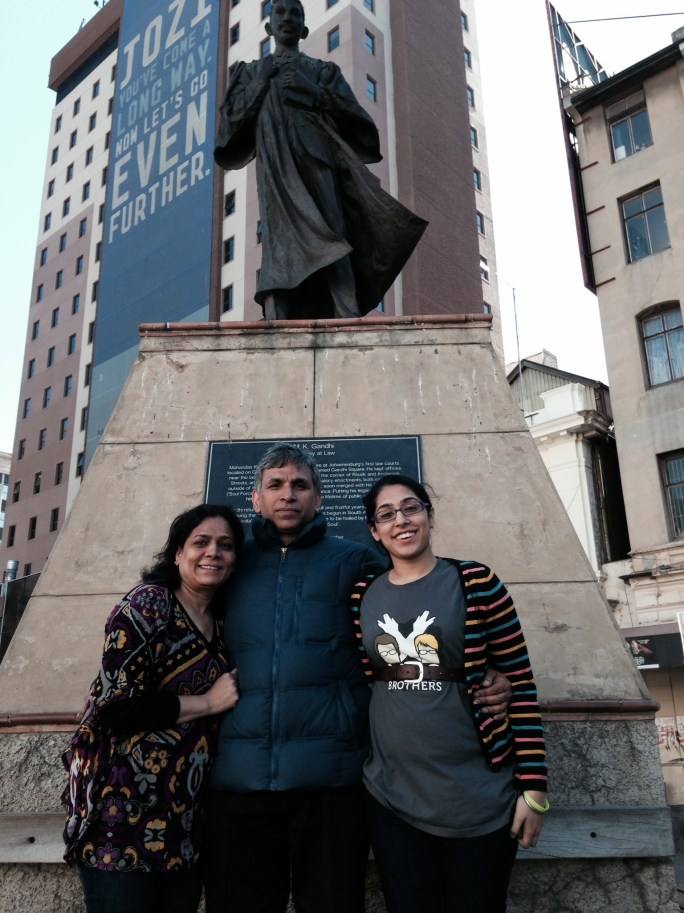
Travels: I also had two major international travels this year, to South Africa and to India. The main purpose of the South African trip in June was to teach a course as part of an Executive MBA program. However, it also included visits to Gandhian monuments in Johannesburg and Durban. It also included sightseeing including the gorgeous city of Cape Town. (see my blog post on SA visit). The main purpose of my trip to India In November-December was to deliver a talk on personal development through transcendence at a conference in IIT Roorkee. After that I went to Yog gram for a week-long naturopathic detoxing retreat, and to Rajasthan to see my extended family (See my posts on the visits to Yog Gram and Pushkar).

Talks: I have delivered a talk on ‘Personal Development through Transcendental Meditation’ four times during the year 2014, three times in the US and once in India. Each time the talk was very well received. I essentially talk about how Transcendence is an orthogonal dimension to Intellect. For intellectually smart people, transcendence can open up new infinite avenues for creativity and fulfillment. I also share about how transcending using TM and TM-Sidhis over the last 2 years helped release my inner stresses and set me up for writing creatively from the heart and getting a great reception.

In addition, I led our South Asia community at our university into celebrations for six major festivals. Three of the celebrations included large bonfires. (See my blog posts on bonfires, and on leadership lessons from holding these events).

I am sure 2015 will bring its own joys!

Visit to Yog Gram in India

Visit to Yog Gram in India

My wife and I spent a wonderful week at the naturopathic institution called Yog Gram near Haridwar in India, last month. This piece describes the nature of our nice and beneficial experience there.

YogGram

Yog Gram, or Yoga Village, was set up just 6-7 years ago by Patanjali Yogpeeth, which in turn is owned and managed by the famous yoga guru Swami Ramdev. Yog Gram is a residential retreat place. It has nice air-conditioned cottages for people to stay for rest, recuperation and detoxing. The minimum stay requirement is one week, and the maximum stay allowed is about two months. Accommodation has to be reserved well in advance, as usually there is a waiting line for getting the chance to get there. The cost of stay is reasonable. It costs only a couple of thousand rupees (about US$40-50) per day for a couple to stay in an air-conditioned cottage. This automatically includes the cost of the ayurvedic food, the naturopathic treatments, doctor examinations, and more.

The first thing that unmistakably hits the visitor to this place, is the abundance of flowers. The place is full of fresh flowers of all colors, sizes and shapes. On both sides of every pathway there are fragrant fresh flowers. This abundance of flowers is painstakingly maintained by 30 full-time resident gardeners. Just being in the midst of such beautiful flowers was uplifting for my soul. I called it floral therapy. In addition, the air quality is amazingly clean by Indian standards. The reason is that this place is next to a forest, the Rajaji national park, and far from the nearest city of Haridwar. Another natural benefit is that it  is in the land of the Holy Seers, so the vibrations are still there. Between the flowers, the pure air and the vibes, the place is like heaven.

When you check in, the doctors in residence examine every health-seeker, and then prescribe the meal patterns as well as the naturopathic treatment for the morning and the evening.

The daily routine is reasonably packed with activity. People wake up at 4:30 am and go to sleep at 9:30 pm everyday. In the morning typically there are cleansing treatments like enema, and sutra-neti and eye-wash etc. There is a 2-hour morning session in the Yoga Hall, which includes yoga practice, and group counseling. After a light customized breakfast, one goes for naturopathic treatments as prescribed. After lunch there is some time for rest. Then again there are healthy juice drinks followed by a mud-pack treatment. Then there are more naturopathic treatments in the afternoon. After a light fruit juice, there is the evening yoga session and group counseling. Then there is customized dinner, after which the health-seekers (as every visitor is called) retire for the day.

The food is custom-prepared for everyone. We were given something to eat or drink 7-8 times during each day. There are 76 different types of naturopathic treatments to select from, in consultation with the doctor. Among the treatments are many kinds of massages (head, back, full-body, etc), and baths (hot-cold, full-back, steam, sauna, etc), and wraps (for the calfs, or the abdomen etc) to name just a few.

We enjoyed and benefited from our stay at Yog Gram. It is a very nice place overall, and a very good value for money. With some minor changes, this place has the potential to become a world-class facility. Currently almost all of the visitors are Indians. The place does not yet offer the privacy of treatment that the western visitors are used to. However, the cost is a small fraction of the cost for a similar naturopathic treatment in the US. So given the value-for-money, soon foreign visitors might make a beeline for the place.

Trip to Pushkar – the king of pilgrimage sites – India

Trip to Pushkar – India

It was fascinating to visit and earn about an ancient and famous place, the holy town of Pushkar, from the eyes of a family members who grew up there in a prominent social position. I had gone there a few times earlier too, but never quite had gotten a feel for the place.

Pushkar is often called ‘Tirath Raj’ or the king of pilgrimage sites. It is also one of the oldest living cities of India. (For more visit http://en.wikipedia.org/wiki/Pushkar.) Pushkar has the unique distinction of having the only temple in the world dedicated to Lord Brahma, the creator of the world according to Vedas. I visited Pushkar in December for just a few hours with my wife Neerja and my mother-in-law. I knew that my mother-in-law was born and had grown up in Pushkar. I requested her to come along with me and show us the town as she lived it. Once we reached there, she became quite animated when showing us where when the important things and important activities were, during her childhood days. Very understated by temperament, she let slip that her extended family (the Maloo family) owned half of Pushkar! I knew about her coming from a rich family in Pushkar, but this seemed really big. As an instance she said that when her father and his brothers separated, each one got many mansions in inheritance. She also stated that they used to own bricks of gold. Those bricks were mortared into walls to keep them safe from robbers. No one trusted the banks, they all trusted gold.

PushkarRaj BrahmaTemple

We visited Pushkar Raj (pic on left), the holy lake in which everyone likes to take a holy dip. It has 52 ghats, or sides from which one can access the lake. We also the Brahmaji temple (pic on right). We visited the other famous temple in Pushkar, the Ranji temple, … the old Ranji template and the the new one. We then visited one of my mother-in-law’s family mansions, which is currently rented out. We bought loads of ‘Maal Puvey’, the rich creamy pancake-shaped dessert for which Pushkar is famous.

I now had a feel for this ancient city.

Leadership Lessons from Organizing Cultural Events

Leadership Lessons from Organizing Cultural Events  …. By Anil Maheshwari

Certain good ideas lead to properly-organized and well-attended ‘successful’ cultural events. This could be applicable to creating good organizations also. I write below from my experience of organizing a few big house-full South-Asian cultural events at MUM over the last 12 months. All the events had the customary song and dance elements. However, they also had new innovations. And they all brought in new challenges, opportunities, surprises and joy. It takes a certain gut-strength to manage it all.

Here is a list of the events we organized and the innovations we incorporated:

  1. Diwali function in November 2013. We created a beautiful innovative poster to promote the event. We introduced the idea of including participants from all South Asian countries including not only India, but also Nepal, Bangladesh, SriLanka, Pakistan, and others. We introduced the idea of a fashion show where all students could showcase their traditional dresses. We introduced the idea of a boy-girl pair of MCs, where the MCs were from different nationalities. We invited the Mayor of the city to the event, and he got the flavor of how important Diwali is for the entire South asian community. We introduced the idea of giving free organic Burfi Prasad to all the attendees. Last but not the least, we kept the event free to the public. The program was wonderful, and the event was a big success. (Pictures courtesy: Craig Shaw). Diwali at MUM 2013
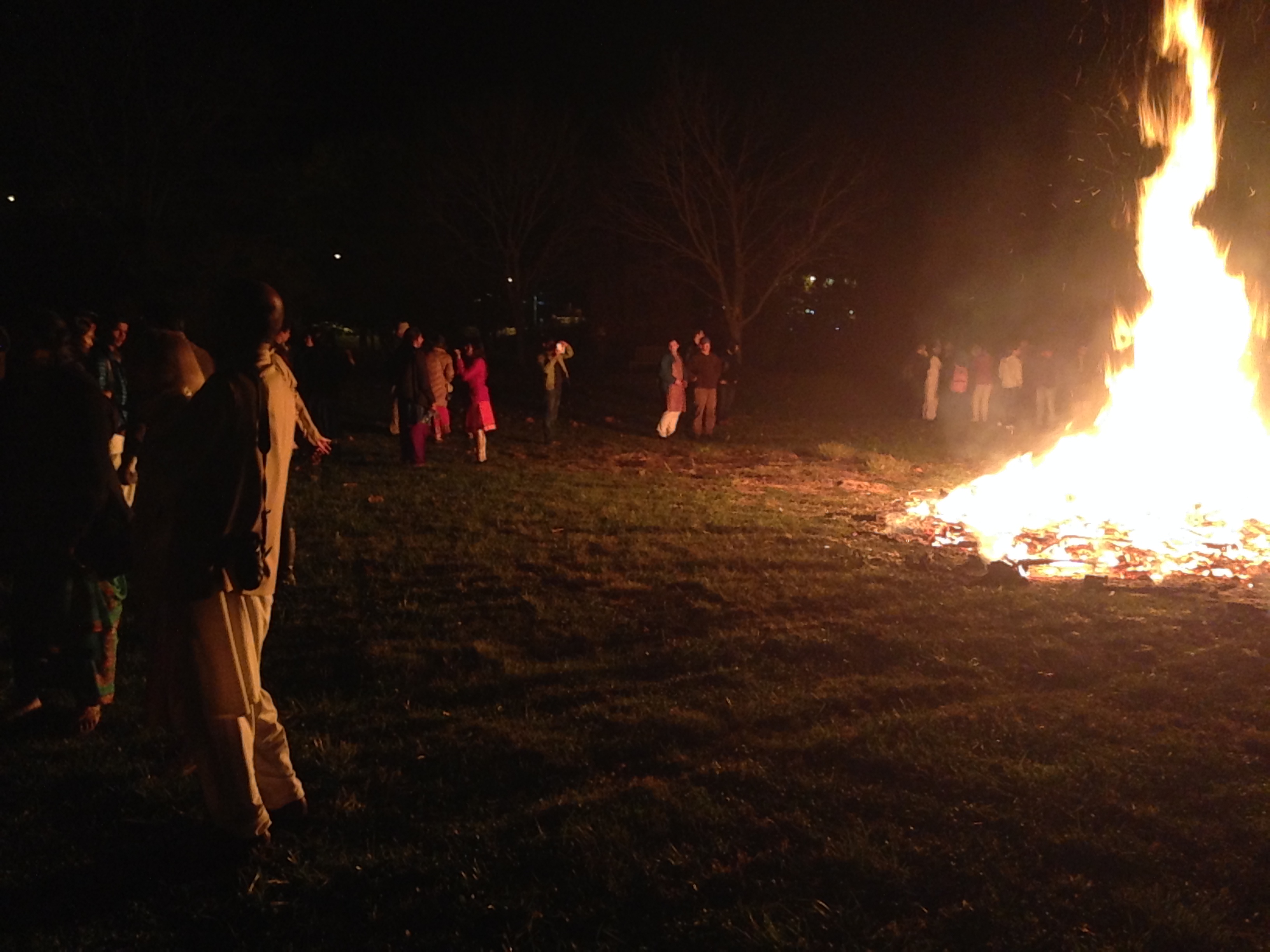
  2. Holi function in March 2014. We introduced the idea of a poetry recitation which is a Holi tradition in India. In this case, I did the recitation of a humorous old poem. We introduced the big idea of doing a large bonfire which is a Holi tradition: Students continued to sing and dance around the fire till midnight. We played with gulal (colored powder) in the night around the fire. We provided free munchies at the bonfire. We introduced the idea of a bhajan band, and this band continued playing at the bonfire also. The event was a super success.
  3. Baisakhi/Ugadi/Indian-New-Year event in April 2014. Coming soon after the Holi event, it was a low-key event. We invited the visiting head of the Maharishi movement in India who was visiting the US at that time. My daughter performed at the event.
  4. Krishna Janam Ashtami event in August 2014. This also worked as a welcoming event for all the new and returning students. We continued the ideas of a MC pair, free burfi Prasad, and a large bonfire. We introduced the idea of playing a Maharishi knowledge tape where he was talking of the significance and power of Lord Krishna. We invited the President of the university; he liked the event and said we needed more of such things to enliven the campus. The event was a house-full and standing room only performance.
  5. Garba dance party in September 2014. This was a dance party for people to dance to traditional Indian garba music. We brought the Dandiya sticks for the dance. At this event we also discovered our new student president of the South asian club.
  6. Diwali event in October 2014. This event used many of our previous ideas. We had the usual Bollywood song and dance shows, an MC pair, a large bonfire, a fashion show that now included people from Africa also. We added a professional Gandharva performance to the event. I led a group bhajan performance. People stood up and joyfully sang the Aarti together. This event was so packed that latecomers could not find space to get into the auditorium.

AKM Diwali 2014MUM campfire picture Oct2014

The organizing of all these events followed a similar pattern, was but there were different challenges each time. Different people pitched in to help when things looked bleak. Through all this I persevered. Here are some of my lessons:

  1. Commitment: Someone has to hold the flag high. Even when no one else is interested or seems to be ready to contribute, the key organizer must love the idea, and should have complete faith that the event will happen, and well. There were moments when there was no one else who came to the event planning meeting.
  2. Self-sufficiency. One should be prepared to invest your own time and resources to make the event happen. One should have the talent to sing and dance, or have your friends and family participate as needed. One can usually find the talent, strength and resources within oneself.
  3. Openness: Be open to surprises. Be open to what might actually happen at the event. Do not get stuck in a preconceived notion of a cultural event. Be open to new ideas from unexpected sources. Be open to support from unexpected sides. Totally different people, faculty or students, pitched in to support each of the events at crucial moments. Later in the year, we found consistent support from one like-minded person on campus.
  4. Integrity: Make sure every event has integrity at a high level. The higher level idea should be to have fun, or whatever else. Do not get caught in the weeds of this item or that, this performer or that, this issue or that. Gradually the reputation will grow and people would love to attend the events.